Finchley House Clearance: Recycling and Sustainability Commitment
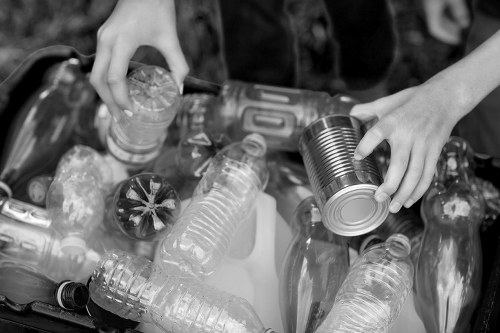 At Finchley House Clearance we put the environment at the heart of every clearance. Our approach to eco-friendly waste disposal area management means every item collected from a property in Finchley is assessed for reuse, repair, donation or recycling before anything is sent for disposal. We operate with a clear sustainability mandate and work to transform traditional house clearance into a sustainable rubbish area model focused on resource recovery and low-carbon operations.
We set a measurable recycling percentage target to drive progress: our company aim is to achieve a 70% recycling rate across all clearances by 2028, rising progressively from current levels. That target covers diversion from landfill and includes reuse, repurposing, and material recycling. To deliver it we track outcomes for bulk collections, segregate on-site where feasible, and prioritise partnerships with local reuse networks and recycling facilities.
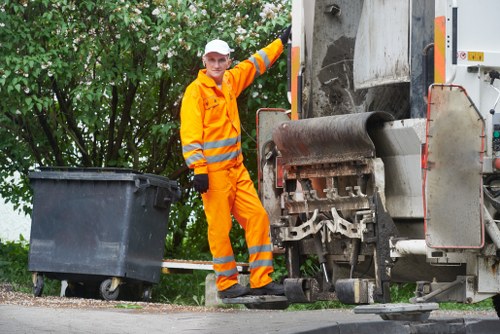 Collaboration with the borough and local waste infrastructure is central. Finchley and the broader London boroughs adopt an approach to waste separation that encourages residents to separate food waste, paper, glass, mixed recycling and garden waste. We mirror this system in our operations, separating electronics, textiles, metals, timber and hazardous items so they can be handled by the correct local transfer stations and authorised processors.
Local Transfer Stations and Responsible Disposal
We regularly utilise Barnet and North London transfer stations and authorised sites — including local Barnet facilities and North London hubs such as Edmonton EcoPark — to ensure materials are processed correctly. These transfer stations provide the next step in the waste hierarchy, sending recyclables to specialist processors and materials recovery facilities (MRFs). Using authorised transfer stations reduces the risk of illegal dumping and ensures chain-of-custody transparency for bulky and complex waste streams such as WEEE (electricals) and construction materials.
 For hazardous or restricted items we work with licensed hazardous waste carriers and specialist dismantlers so materials like asbestos-containing components, solvents or certain batteries are managed safely and legally. Our procedures include clear labelling of material streams and secure transport to the right facility, reducing contamination and improving overall recycling yields.
We maintain a strong logistics protocol so that cleared items destined for recycling arrive intact and uncontaminated. That protocol includes pre-collection audits, trained crew handling, and segregation on-site whenever possible. These steps support a higher recycling percentage and better outcomes for local material recovery operations.
Partnerships with Charities and Reuse Organisations
One of the first routes we explore for furniture and household goods is reuse. Finchley house clearances are coordinated with a network of charities and social enterprises that accept furniture, clothing and appliances in reusable condition. We partner with national and local organisations — such as Age UK, Emmaus-style projects, and the British Red Cross outlets — as well as smaller Finchley-based community groups. These partnerships keep usable items in circulation and support vulnerable people across the borough.
Our charity partnerships also cover collection scheduling and direct drop-offs to local outlets rather than sending items through multiple handling stages. That increases the likelihood of reuse and reduces the carbon footprint per item. In addition, we work with local reuse shops and community projects that run repair workshops and upcycling schemes, turning what would be waste into valued household goods.
 To help householders and landlords make sustainable choices, our teams give clear options at the point of booking: donate usable items to charity partners, recycle materials via local transfer stations, or request specialist disposal for hazardous waste. By offering transparent choices we support the borough's overall waste separation strategy and encourage responsible, circular outcomes.
 Low-carbon transport is a practical way we reduce the environmental impact of clearances. Our fleet includes electric and low-emission vans, and where suitable we deploy smaller, efficient cargo vehicles for tight-access jobs. These low-carbon vans cut urban emissions and align with London’s air quality priorities. We also optimise routes to reduce mileage and use consolidated collections to increase efficiency across Finchley and neighbouring areas.
Operationally, our environmental policy emphasises continuous improvement. We audit recycling performance against the 70% target, record destination statements for materials, and publish progress internally so teams can refine sorting and reuse choices. Our commitment to an eco-friendly waste disposal area ethos means we will continue to invest in training, partnerships and greener vehicles.
By combining careful on-site segregation, strong local partnerships, and low-emission logistics, our Finchley clearance services turn house clearance into a sustainable opportunity. We prioritise reuse, support local charities, use authorised transfer stations and low-carbon vans, and pursue a measurable recycling percentage target — all to ensure that clearances deliver social and environmental value rather than simply creating rubbish.